FIELD NOTE / Art & technical collaboration
Tools that bring creative visions to life
A technical system should give an artist more control over what they mean to make.
Build the tool around the creative intent
A bespoke parametric or generative design tool begins with a conversation about the work. What should it express? Which relationships give it its character? What should remain recognisable as it changes? I translate those intentions into a small set of controls that an artist or maker can understand and challenge. The interface should speak their language: rhythm, density, openness, variation, softness or the trace left by a material process.
The purpose is to put useful agency in the creative’s hands. Instead of requesting a new model for every adjustment, they can explore a family of possibilities, compare the results and decide what feels right. A parametric model makes relationships explicit. A generative system can propose alternatives within those relationships. Neither replaces the author’s judgment.
From an idea to a working instrument
First, we establish a shared reference: a sketch, sample, gesture, sound recording, scan or material experiment. I separate what must stay fixed from what can vary, then build a small prototype around one promising relationship. A good first version answers a question we can test together. It need not solve the entire project.
The next step is to connect the visible controls to a dependable geometric model. Dimensions, continuity, component spacing and assembly logic need to stay coherent as the artist moves through the design space. Material and machine constraints belong inside that model where possible: minimum thickness, bend limits, tool access, stock sizes or a safe range of deposition speeds. We can then expose purposeful variation without asking the creative to manage every technical dependency.
The feedback loop matters as much as the algorithm. We generate alternatives, retain promising versions, make small physical samples and compare the physical result with the preview. The grain of wood, the behaviour of clay or the mark of a cutting tool may suggest a new control. That observation becomes part of the next version of the system. Saved parameter sets and repeatable exports make it possible to revisit an experiment rather than reconstruct it from memory.
A model that reaches the workshop
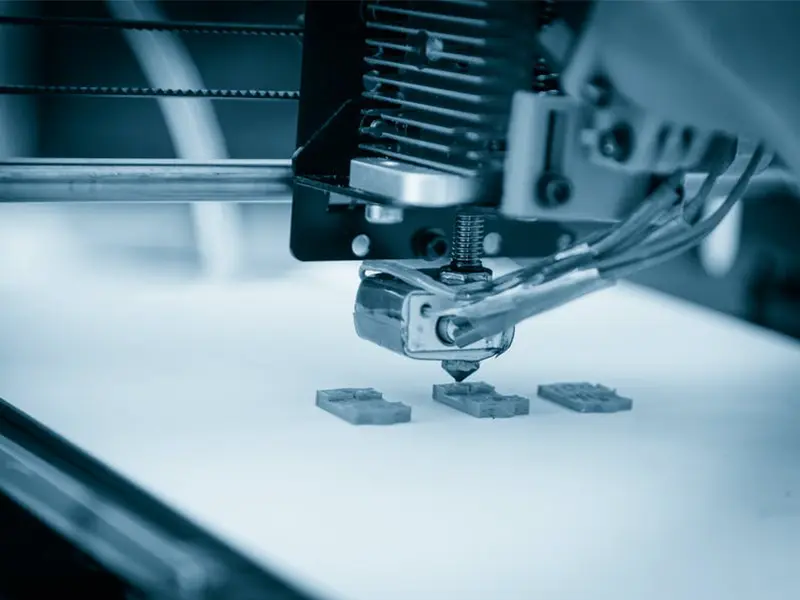
In the Imperfect ceramic printing study, my contribution was a parametric model and G-code workflow that let the material team explore deposition speed and surface texture. Ashish Mohite led the clay-printing research and Mariia Kochneva developed the concept. The tool linked geometric choices to fabrication behaviour, while the material experiments informed what the model needed to express.
At handover, the useful output may be much more than a finished mesh: labelled parts, cutting profiles, assembly references, fabrication paths or a small interface that the team can keep using. This shifts repeated technical work into a reusable capability. It also leaves room for late creative decisions because the downstream information can be regenerated consistently.
Giving a sculptural idea a dependable workflow
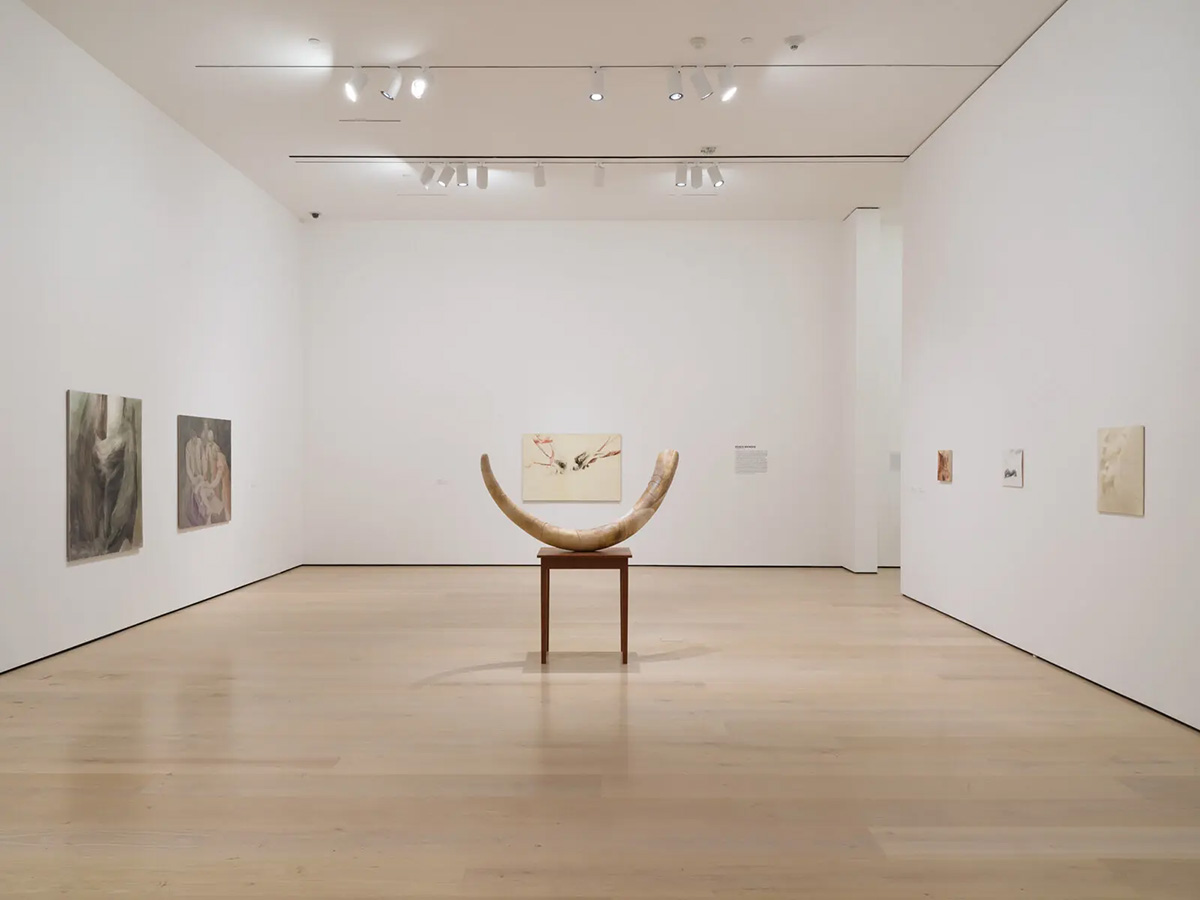
The tusk-shaped sculpture in Beaux Mendes’s presentation at Made in L.A. 2025 is shown below in Jeff McLane’s installation photograph. Sculptural collaborations call for a close translation between a creative’s intended silhouette, the continuity of a surface and the practical sequence of making it. A custom tool can let those relationships change together while keeping the artist in control of the result. Authorship of the artwork stays with the artist; the computational workflow supports its development.
Different practices, a shared conversation
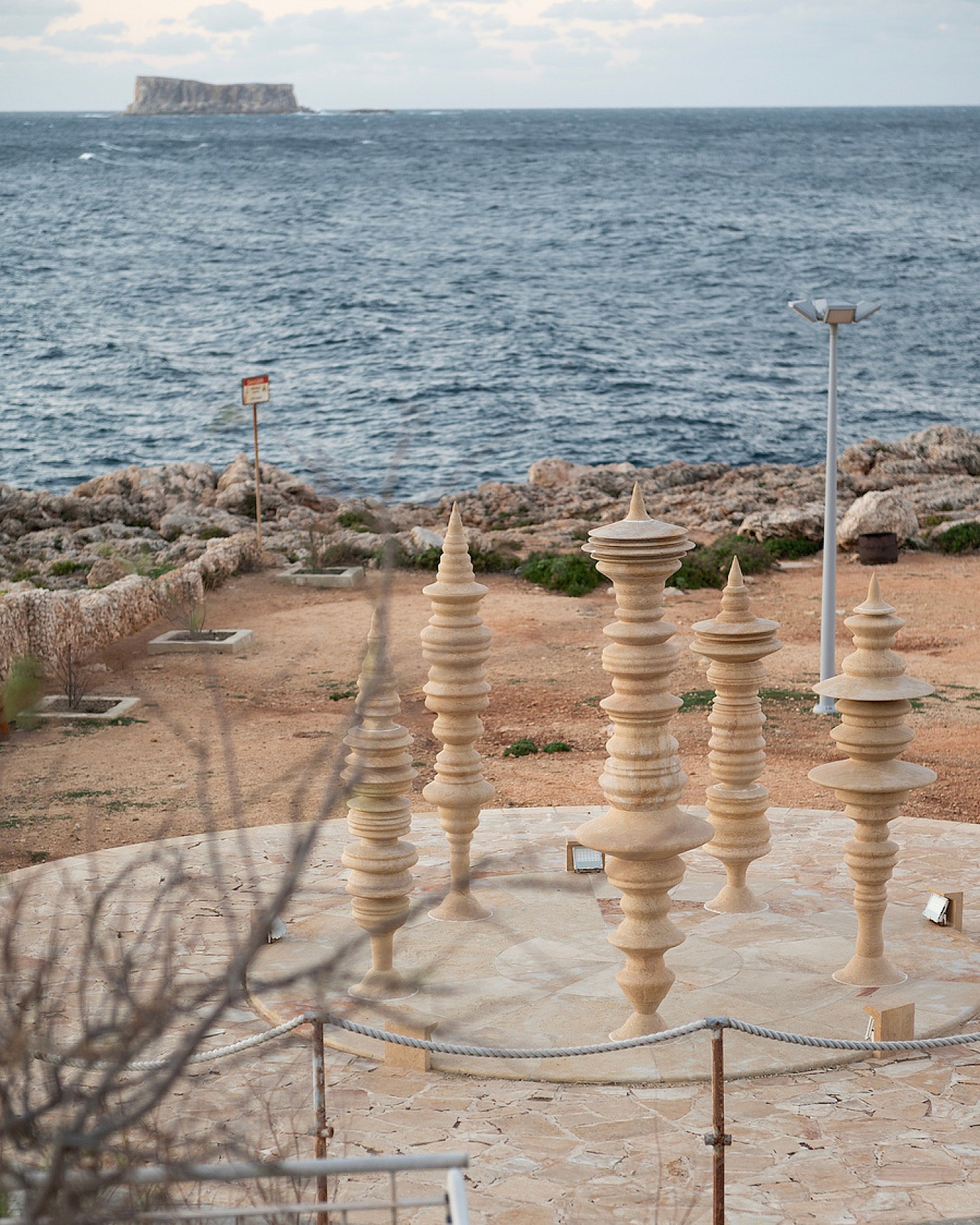
Adrian MM Abela’s Court for Concealed Thoughts in Malta gives recorded voices a spatial and material presence in stone. It is a compelling context for discussing how a source signal can become a family of forms without losing the idea that gives those forms meaning. The photograph below is credited to the artist’s archive; authorship of the artwork remains with Abela.
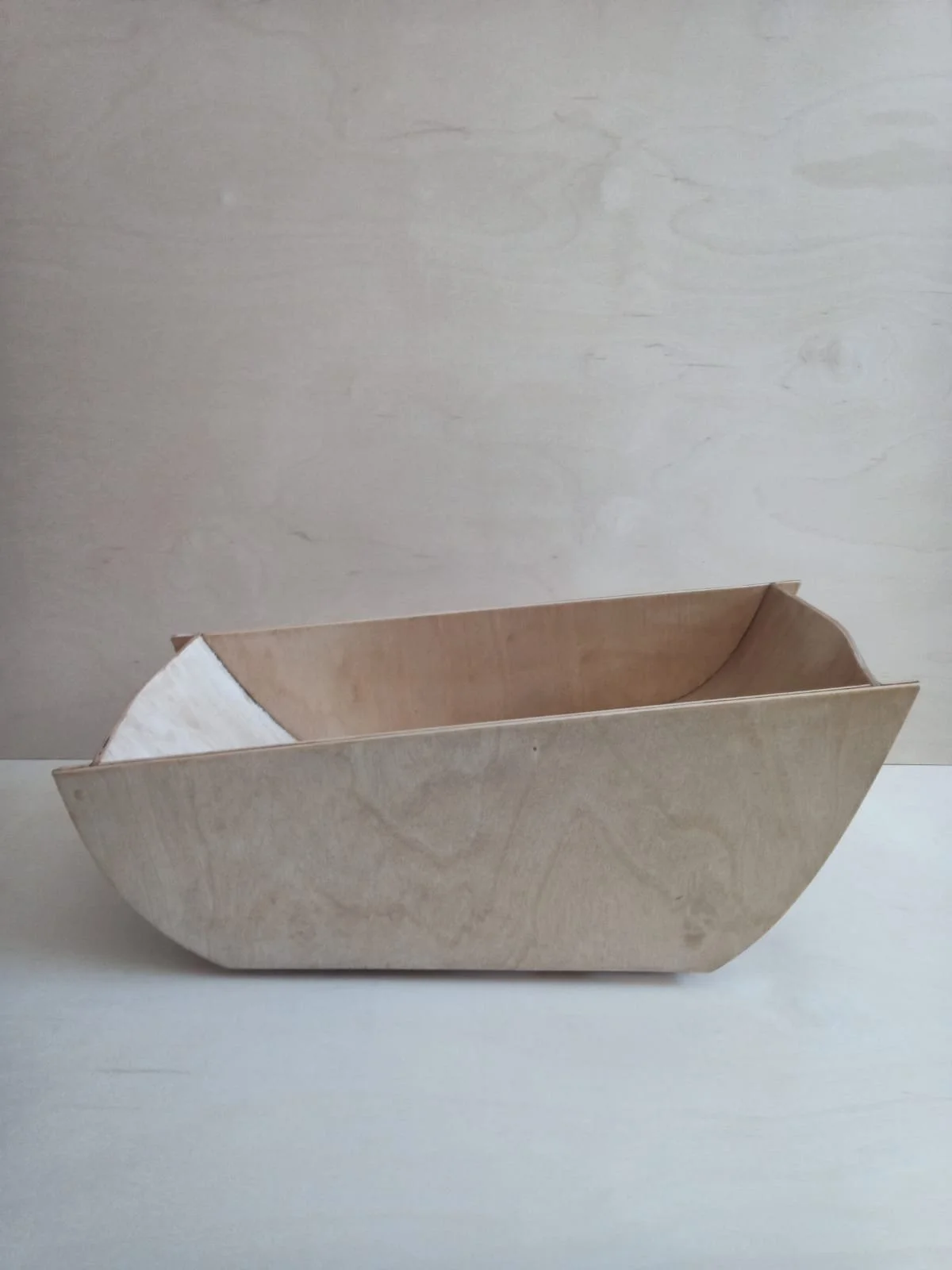
Ambitious, founded by Matthew Catania, brings material research and digital fabrication into the same conversation. In AMME, Haptic Art Lab and Borg Markkula collaborated on a versatile baby bathtub using wood-based materials and finishes. The prototype brings this process into focus: a product idea becomes a geometric system, then a physical test that can inform the next iteration. The images here are identified by project and origin, rather than implying a shared authorship across these practices.
What a tailored tool enables is a closer dialogue between a creative decision and its consequences. An artist can test more variations, a maker can repeat a promising process, and a team can carry knowledge from one iteration into the next. The measure of success is whether the system helps the person using it make the work they mean to make.
REFERENCES & FURTHER READING
- Court for Concealed Thoughts ↗
- Ambitious Malta ↗
- Hammer Museum review ↗
- Haptic Art Lab / AMME ↗
- Imperfect project and team ↗
Short paper excerpts above are attributed to their authors. Commentary is Kane Borg’s interpretation.